
• KANAD
  • Contact us
  • E-Submission
ABOUT
BROWSE ARTICLES
EDITORIAL POLICY
FOR CONTRIBUTORS

Page Path

  • HOME
  • Browse articles
  • Most cited article
34
results for

Most cited article

Filter

Article category

Keywords

Publication year

Authors

Funded articles

Most cited article

Most-cited are based on citations from 2024 ~ 2026.

Original Articles
Role Conflict of Physician Assistants with Nursing Licenses in Korea
Byeongkwan Kim, Wonhee Jung
J Korean Acad Nurs Adm 2024;30(2):141-151.   Published online March 31, 2024
DOI: https://doi.org/10.11111/jkana.2024.30.2.141
Purpose
This conceptual analysis aimed to reveal the “role conflict of physician assistants with nursing licenses in Korea” by defining and organizing its concept.
Methods
This study used the conceptual analysis process of Walker and Avant.
Results
The role conflict of Korean physician assistant nurses can be defined by the following attributes: “Confusion of identity,” “Psychological burden of work,” “Anxiety and fear of legal responsibility,” “Anxiety about an uncertain future,” “Relative deprivation,” “Sense of neglect,” and a “Lack of sense of belonging.” The antecedents identified were: “unclear work boundaries,” “absence of work guidelines,” “excessive work and poor environment,” “Absence of regulations and administrative regulation,” “Exclusion from unfair treatment and promotion,” “Difficulty measuring job performance,” “Absence of job autonomy,” and “Physician group interest pursuit.” The consequences were: “Decreased job satisfaction,” “Decreased sense of achievement,” “Decreased self-esteem,” “Limited growth,” “Increased turnover intentions,” “Exhaustion of mind and body,” “Career identity crisis,” and “Frustrations.” Conclusion: This study provides basic data for constructing a theory concerning role conflict among Korean dedicated nurses and promotes the development of measurement tools. Furthermore, it meaningfully presents both theoretical grounds for reducing the role conflict of dedicated nurses and evidence for legalization.

Citations

Citations to this article as recorded by  
  • Cultural adaptation and psychometric validation of the Korean version of the Intensive care unit Dignified Care Questionnaire (IDCQ)
    Sejin Kang, So Hyun Park, Youn-Jung Son
    BMC Nursing.2026;[Epub]     CrossRef
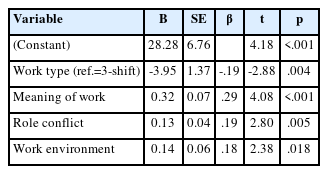
  • Effects of Role Conflict, Work Environment, and Meaning of Work on Job Embeddedness among Physician Assistants
    Kwang Hoon Seo, Tae Yeong Yang, Nam Gyu Park, Jung Eun Park
    Journal of Korean Academy of Nursing Administration.2025; 31(3): 249.     CrossRef
  • Role Transformation and Adaptation of Physician Assistants during the 2024 Medical Workforce Shortage: A Phenomenological Study
    Tae Yeong Yang, Nahyun Lee
    Journal of Korean Academy of Nursing Administration.2025; 31(3): 259.     CrossRef
  • A study on the job performance, importance, and educational needs of clinical practice nurses in tertiary hospitals
    Hyemi Lee, Youngmee Ahn, Min Sohn, Minhee Suh
    The Journal of Korean Academic Society of Nursing Education.2025; 31(3): 315.     CrossRef
  • The Influence of Clinical Practice Nurses' Self-Leadership, Role Conflict, and Practice Environment on Patient Safety Competency
    Jeong Hwa Heo, Ji Hyun Sung
    Journal of Korean Academy of Nursing Administration.2025; 31(4): 458.     CrossRef
  • Legal and Practical Solutions for the Expanding the Roles of Medical Support Staff Nurses
    Su Jung Choi, Min Young Kim
    Journal of Korean Academy of Nursing.2024; 54(3): 300.     CrossRef
  • 6,480 View
  • 281 Download
  • 6 Crossref
Purpose
This study aimed to explore the relationship between grit and work engagement among millennial and Generation Z (MZ generation) nurses, as well as the moderating effect of work friendships on this relationship.
Methods
The study included 191 MZ generation nurses with over six months of experience, surveyed via a self-administered questionnaire at four general hospitals in Daejeon and Seoul from December 2020 to February 2021. Descriptive statistics, t-tests, one-way analysis of variance, Pearson’s correlation analysis, and hierarchical multiple regression were used to analyze the collected data. The PROCESS macro program with bootstrapping was employed to evaluate the significance of mediating effects.
Results
Work friendships partially mediated the association between grit and work engagement, with an explanatory power of 29.9%. The significance of the indirect mediating effect using bootstrapping analysis indicated an effect size of 0.33, a lower limit confidence interval of 0.17, and an upper limit confidence interval of 0.52, which was significant as it did not include Zero.
Conclusion
Developing a program to improve grit is necessary to increase the work engagement of MZ generation nurses, and establishing and implementing a program to improve work friendships, along with education for individual nurses, is crucial.

Citations

Citations to this article as recorded by  
  • Impact of Superior's Ethical Leadership as Perceived by Nurses on Nursing Performance: Mediating Effect of Faith in Supervisor
    Miyoung Kim, Hyung-Eun Seo, Eun-Young Doo, Won-Jin Ju
    Journal of Korean Academy of Nursing Administration.2017; 23(5): 483.     CrossRef
  • Effects of Empowerment and Job Satisfaction on Nursing Performance of Clinical Nurses
    Ji-Yeon Choi, Eun-Kyung Kim, Se Young Kim
    Journal of Korean Academy of Nursing Administration.2014; 20(4): 426.     CrossRef
  • The Effect of Empowerment on Nursing Performance, Job Satisfaction, Organizational Commitment, and Turnover Intention in Hospital Nurses
    Eun Hee Oh, Bok Yae Chung
    Journal of Korean Academy of Nursing Administration.2011; 17(4): 391.     CrossRef
  • Relationship between Critical Thinking Disposition, Clinical Decision Making and Job Satisfaction of Cancer Center Nurses
    Sam Chul Jung, Dukyoo Jung
    Journal of Korean Academy of Nursing Administration.2011; 17(4): 443.     CrossRef
  • 4,088 View
  • 114 Download
  • 4 Crossref
Influence of Work Environment, Missed Nursing Care, and Non-Nursing Tasks of Hospital Nurses on Job Stress
Ji Yeong Park, Kyoung Ja Kim
J Korean Acad Nurs Adm 2024;30(3):246-258.   Published online June 30, 2024
DOI: https://doi.org/10.11111/jkana.2024.30.3.246
Purpose
This study aimed to determine the impact of work environment, missed nursing care, and non-nursing tasks on the job stress of hospital nurses.
Methods
A descriptive, cross-sectional survey of 164 nurses working in three hospitals was conducted. Data were collected using structured questionnaires and analyzed using descriptive statistics, t-test, one-way analysis of variance, Pearson’s correlation coefficient, and multiple regression analysis using SPSS/WIN 26.0.
Results
Hospital Nurses' job stress was negatively correlated with the work environment (r=-.37, p<.001). Job stress had a statistically significant positive correlation with non-nursing tasks (r=.34, p<.001); however, it had no significant correlation with missed nursing care (r=.05, p=.552). Regression model analysis revealed that the variables associated with job stress were non-nursing tasks (β=.29, p<.001) and the foundation for quality nursing care (β=-.25, p=.034), which are subdomains of the work environment. In contrast, missed nursing care was not determined to be a significant factor.
Conclusion
To effectively manage nurses' job stress, nurse managers should provide higher quality care by reducing the number of non-nursing tasks and creating a positive work environment, especially by providing adequate nursing workforce and material support.

Citations

Citations to this article as recorded by  
  • Effects of Role Conflict, Work Environment, and Meaning of Work on Job Embeddedness among Physician Assistants
    Kwang Hoon Seo, Tae Yeong Yang, Nam Gyu Park, Jung Eun Park
    Journal of Korean Academy of Nursing Administration.2025; 31(3): 249.     CrossRef
  • Occupational Stress, Coping, and Outcomes among Korean Nurses: An Integrative Review Based on the Transactional Model of Stress and Coping
    Myungji Kim, Hyunkyung Choi
    STRESS.2025; 33(3): 127.     CrossRef
  • Factors Influencing Nursing Care Left Undone by Cancer Ward Nurses
    Chung Hee Woo, Yeon Joo Kim
    Journal of Korean Academy of Nursing Administration.2025; 31(5): 594.     CrossRef
  • Comparison of Factors Affecting Delirium Nursing Stress between Nurses in Comprehensive Nursing Care Service Wards and General Wards
    Sumin Gwon, Gaeun Kim
    Journal of Korean Academy of Nursing Administration.2024; 30(5): 517.     CrossRef
  • 3,939 View
  • 202 Download
  • 4 Crossref
Purpose
This study aimed to identify the mediating effects of positive psychological capital on the relationship between occupational stress and organizational commitment in physician assistant nurses.
Methods
The participants were 152 physician assistant nurses recruited from two university hospitals. Data was collected through a survey. The SPSS/WIN program (version 25.0) was used for the data analysis. Data was analyzed using descriptive stastics, t-test, ANOVA, Pearson’s correlation analysis, and hierarchical regression.
Results
There was a significant negative correlation organizational commitment and occupational stress (r=-.57, p<.001), and a positive correlation with positive psychological capital (r=.47, p<.001). There was a negative correlation (r=-.32, p<.001) between occupational stress and positive psychological capital. In addition, positive psychological capital had a partial mediating effect on the relationship between occupational stress and organizational commitment (β=.32, p<.001).
Conclusion
Positive psychological capital serves as a partial mediator in the relationship between occupational stress and organizational commitment among physician assistant nurses. The results of this study can be used reduce occupational stress and improve organizational commitment by improving the positive psychological capital of physician-assistant nurses.

Citations

Citations to this article as recorded by  
  • Role Transformation and Adaptation of Physician Assistants during the 2024 Medical Workforce Shortage: A Phenomenological Study
    Tae Yeong Yang, Nahyun Lee
    Journal of Korean Academy of Nursing Administration.2025; 31(3): 259.     CrossRef
  • The Influence of Clinical Practice Nurses' Self-Leadership, Role Conflict, and Practice Environment on Patient Safety Competency
    Jeong Hwa Heo, Ji Hyun Sung
    Journal of Korean Academy of Nursing Administration.2025; 31(4): 458.     CrossRef
  • The Influences of Positive Psychological Capital and Nursing Work Environment on Job Embeddedness among Advanced Beginner Nurses
    Eunhye Gil, Mi-Ae You, Ji Yea Lee, Sunjoo Boo
    Journal of Korean Academy of Nursing Administration.2025; 31(5): 549.     CrossRef
  • 3,037 View
  • 121 Download
  • 3 Crossref
Effects of Nurse-Nurse Collaboration and Nurse-Physician Collaboration on Nursing Performance in Nurses: The Mediating Effect of Patient Safety Management Activities
JaHyun Kim, Seok Hee Jeong, Hee Sun Kim, Sunmi Kim
J Korean Acad Nurs Adm 2024;30(4):343-356.   Published online September 30, 2024
DOI: https://doi.org/10.11111/jkana.2024.30.4.343
Purpose
This study investigated the mediating effects of patient safety management activities on the relationship between nurse-nurse collaboration, nurse-physician collaboration, and nursing performance of clinical nurses.
Methods
Online survey was performed from February 18 to February 28, 2023 using structured questionnaires. The participants were 212 clinical nurses working in tertiary general hospitals in South Korea. The participants completed self-reporting questionnaires, that measured nurse-nurse collaboration, nurse-physician collaboration, nursing performance, and patient safety management activities. Data were analyzed using SPSS 29.0 program, for multiple regression and a simple mediation model, applying the PROCESS macro with a 95% bias-corrected bootstrap confidence interval.
Results
Nurses' patient safety management activities had a mediating effect on the relationship between nurse-nurse collaboration and nursing performance (B=0.24, Boot 95% CI=0.16∼0.34). In addition, patient safety management activities showed a mediating effect on the relationship between nurse-physician collaboration and nursing performance (B=0.10, Boot 95% CI=0.07∼0.15).
Conclusion
The levels of nurse-nurse collaboration, nurse-physician collaboration, and patient safety management activities must be considered when developing strategies to improve nurses’ performance in nursing practice settings.

Citations

Citations to this article as recorded by  
  • Nurses’s Experience with Department Transfer Following Sudden Ward Closure after a Collective Resignation of Residents
    Yeon Hee Kim, Jeong Min Jo, Hye Mi Kim, Gyu Ri An, Na Yeon Lee, Hee Suk Ha
    Journal of Korean Association for Qualitative Research.2025; 10(1): 14.     CrossRef
  • The Mediating Effect of Missed Nursing Care on Nurse Collaboration and Perceived Care Quality Among Nurses
    Merve Tarhan, Dilan Şahin Kaya
    Journal of Nursing Care Quality.2025;[Epub]     CrossRef
  • Interprofessional Education in Nursing: Current Status and Student Readiness
    Seuk Oh, Chaeeun Jeong, Seungheon Jang, Songwhi Noh, Jina Choo
    Korean Medical Education Review.2025; 27(Suppl1): S31.     CrossRef
  • 7,677 View
  • 455 Download
  • 3 Crossref
Purpose
This study aimed to examine the levels of professional autonomy, retention intention, and organizational commitment among public hospital nurses, while also investigating the mediating effect of organizational commitment on the relationship between professional autonomy and intention to remain.
Methods
Data for this study were collected through an online survey conducted from August 5 to August 11, 2022, targeting 230 nurses across three public hospitals within a single region. Data analysis was performed using SPSS/WIN 23.0.
Results
Organizational commitment fully mediated the relationship between professional autonomy and retention intentions among public hospital nurses. Positive correlations were observed between professional autonomy and retention intention (r=.24, p<.001), organizational commitment and intention to remain (r=.72, p<.001), as well as professional autonomy and retention intention (r=.34, p<.001).
Conclusion
; To enhance the retain intention among public hospital nurses, it is imperative to focus on program development and institutional administrative efforts aimed at ensuring professional autonomy and fostering organizational commitment.

Citations

Citations to this article as recorded by  
  • The Effects of Presenteeism, Burnout, and Nursing Performance on Retention Intention among Nurses at an Intensive Care Unit
    Seung-Hee Lee, Na Rin Kim
    Journal of Korean Academy of Nursing Administration.2025; 31(3): 269.     CrossRef
  • Retention and Associated Factors among Nurses in Small- and Medium-Sized Hospitals across South Korea
    Eun Mi Kim, Su Jung Choi, mi sug Lee, Hyun Jin Park, Jeong Yun Park
    Journal of Korean Critical Care Nursing.2025; 18(3): 16.     CrossRef
  • Mediating Effects of Job Satisfaction and Organizational Commitment on the Relationship between Organizational Justice and Intent to Stay among Junior Nursing Officers
    Ji Soo Bae, Sung-Heui Bae
    Journal of Korean Academy of Nursing Administration.2025; 31(5): 527.     CrossRef
  • 10,195 View
  • 47 Download
  • 3 Crossref
Purpose
To identify the mediating effect of the communication competence on the relationship between emotional intelligence and nursing managerial competence among experienced nurses.
Methods
A total of 186 nurses with more than 10 years of experience working in six general hospitals participated. Data were collected using a selfreported questionnaire and analyzed using SPSS Statistics ver. 23.0 and SPSS Process Macro for descriptive statistics, independent t-test, one-way analysis of variance (ANOVA), Scheffé test, Pearson’s correlation coefficient, multiple regression analysis, and bootstrapping method.
Results
Nursing managerial competence was significantly associated with emotional intelligence (r=.32, p<.001) and communication competence (r=.42, p<.001). Additionally, communication competence had a complete mediating effect on the relationship between emotional intelligence and nursing managerial competence (indirect effect=0.45, boot SE=0.11, 95% boot CI=[0.25, 0.67]).
Conclusion
Strategies for enhancing the experienced nurses’ nursing managerial competence should be considered to improve communication competence as well as emotional intelligence and develop nursing managerial competency-related education programs by career stages. In particular, the nursing management competency-related education should focus on improving human resource management and planning competences.

Citations

Citations to this article as recorded by  
  • Factors influencing delirium nursing competency among nurses in integrated nursing care wards in South Korea: a cross-sectional study
    Jeeyoung Yeon, Gisoo Shin
    Journal of Korean Biological Nursing Science.2025; 27(2): 256.     CrossRef
  • Factors Impacting on Nurse Unit Managers’ Knowledge and Ability Importance of Managerial Competencies
    Jihae Lee, Miyoung Kim
    Journal of Korean Academy of Nursing Administration.2024; 30(4): 428.     CrossRef
  • Factors Influencing Depression Among Nurses in General Hospitals During the COVID-19 Pandemic: Focus on Job Demands, Post-traumatic Stress, and Social and Organizational Support
    Si Hyun Baek, Jeong-Hee Kim
    Journal of Korean Academy of Nursing Administration.2024; 30(3): 306.     CrossRef
  • 1,250 View
  • 68 Download
  • 3 Crossref
General Nurses’ Nursing Leadership Experience in Patient Care: Applying Focus Group Interviews
Ji-Mee Kim, Haena Lim, Yeojin Yi, Jung-Hee Song
J Korean Acad Nurs Adm 2024;30(1):19-30.   Published online January 31, 2024
DOI: https://doi.org/10.11111/jkana.2024.30.1.19
Purpose
This study aimed to examine general nurses' nursing leadership in patient care using focus group interviews.
Methods
This study was conducted after obtaining approval from the ethics committee of a university. After completing a focus group interview with 13 general nurses working at a general hospital, we performed qualitative content analysis according to Kreuger's guidelines.
Results
A total of 170 meaningful statement units of nursing leadership that appeared in the clinical experience of general nurses were extracted, and 10 final sub-themes and the three themes connecting them were derived. The themes derived were “leading patients into nursing,” “experiencing the power of growth,” and “facilitating situations that allow focus on patient care.” Conclusion: This study helps in understanding the nursing leadership of general nurses in patient care. To encourage general nurses to exert their nursing leadership and grow as autonomous nurses, nursing educators must appropriately present the learning outcomes and content of nursing leadership. Additionally, in the clinical setting, organizational support is necessary to foster understanding and the demonstration of general nurses' nursing leadership.

Citations

Citations to this article as recorded by  
  • Effects of Patient Safety Management System, Leadership, and Communication Types on Nurse’ Patient Safety Management Activities
    Eunji Lee, Haejung Lee
    Journal of Korean Academy of Nursing Administration.2024; 30(4): 367.     CrossRef
  • Mediating Effect of Self-efficacy in the Relationship between Informal Learning, Shared Leadership and Organizational Socialization of Beginner · Advanced Beginner Nurses
    Nam Yi Kim, Chung Hee Woo
    Journal of Korean Academy of Nursing Administration.2018; 24(1): 1.     CrossRef
  • Nursing Performance and Organizational Socialization of New Nurses according to Teaching Style of Preceptors and Personality of New Nurses
    Jeong Sill Choi, Nam Young Yang
    Journal of Korean Academy of Nursing Administration.2012; 18(3): 281.     CrossRef
  • 1,581 View
  • 93 Download
  • 3 Crossref
Purpose
Turnover rates among nurses in South Korea are higher than those of other job groups, affecting hospital performance. This study clarified the mediating role of perceived organizational and supervisor support in the relationship between nurses’ organizational citizenship behavior and turnover intention.
Methods
This study involved a descriptive survey of 160 nurses working in two hospitals in S, South Korea. Data were analyzed using the Hayes PROCESS macro (Model 4) program, version 3.4.
Results
Organizational citizenship behavior was positively correlated with perceived organizational support and perceived supervisor support but negatively correlated with turnover intention. Perceived organizational support was positively correlated with perceived supervisor support. Additionally, perceived organizational and supervisor support were negatively correlated with turnover intention. The authors verified the mediating role of perceived organizational support in the relationship between organizational citizenship behavior and turnover intention. However, the mediating role of perceived supervisor support was not confirmed.
Conclusion
The higher a nurse’s organizational citizenship behavior, the higher their perceived organizational support, which reduces turnover intention. High-quality nursing contributes to organizational performance; therefore, the nursing workforce should be carefully preserved.

Citations

Citations to this article as recorded by  
  • Measured nursing perception of the working environment through authentic leadership with technology support and OCB among Chinese public hospitals
    Abid Hussain, Wang Ruowei, Xu Xia, Shahida Kanwel, Shen Chunhong, Arif Jameel
    BMC Nursing.2025;[Epub]     CrossRef
  • Perceived Organisational Support as a Mediator Between Green Organisational Culture and Organisational Commitment: Evidence From Manufacturing Firms in Peru
    Cristian Villar, Ruben Guevara
    Sage Open.2025;[Epub]     CrossRef
  • Nurse Engagement in Professional and Organisational Citizenship Over the Past Decade: An Integrative Review
    Adrianna Watson, Carmel Bond, Rebecca Jarden, Debra Jackson
    Journal of Advanced Nursing.2025;[Epub]     CrossRef
  • 5,099 View
  • 141 Download
  • 3 Crossref
Purpose
The study aims to confirm the mediating effect of nursing professional pride in the relationship between nursing practice environment, nursing performance, and retention intention.
Methods
A descriptive cross-sectional survey was conducted from December 13 to 31, 2021, involving 127 nurses. The following statistical analysis was conducted: t-test, ANOVA, Scheffé test, Pearson's correlation coefficient analysis, and Hayes Process Macro Model 4 (to test the mediating effect).
Results
Nursing practice environment showed a significant positive correlation with nursing performance, retention intention, and nursing professional pride. Nursing practice performance showed a positive correlation with retention intention and nursing professional pride, and retention intention showed a significant positive correlation with nursing professional pride. The mediating effect of nursing professional pride was found in the effect of nurses' nursing practice environment on their retention intention. In addition, the mediating effect of nursing professional pride was found in the effect of nurses' nursing practice performance on their retention intention.
Conclusion
Through this study, it was confirmed that nursing professional pride is a major A factor affecting retention intention in the hospital. Therefore, in order to increase nurses' retention intention to remain in Hospital, the basis of basic data was presented for strategy development.

Citations

Citations to this article as recorded by  
  • A Grounded Theory Approach to Understanding Retention among Career Nurses in Clinical Practice
    Su Mi Choi, Ji Won Kim
    The Korean Journal of Health Service Management.2025; 19(2): 57.     CrossRef
  • Retention and Associated Factors among Nurses in Small- and Medium-Sized Hospitals across South Korea
    Eun Mi Kim, Su Jung Choi, mi sug Lee, Hyun Jin Park, Jeong Yun Park
    Journal of Korean Critical Care Nursing.2025; 18(3): 16.     CrossRef
  • 3,197 View
  • 184 Download
  • 2 Crossref
Effects of Clinical Nurses' Ethical Climate and Ethical Nursing Competence on Moral Distress
Sun Mi Ha, Yeong Ju Yoon
J Korean Acad Nurs Adm 2025;31(1):25-35.   Published online January 31, 2025
DOI: https://doi.org/10.11111/jkana.2025.31.1.25
Purpose
This study aimed to identify the effects of clinical nurses' ethical climate and ethical nursing competence on moral distress.
Methods
The participants were clinical nurses who provided direct nursing care; nurses with more than one year of work experience in general hospitals were targeted. The data were collected between January 3 and 19, 2024, and analyzed using t-test, analysis of variance, Games-Howell test, Pearson correlation coefficient, and multiple regression.
Results
Moral distress was significantly and negatively correlated with ethical climate and ethical nursing competence. Factors affecting the moral distress of clinical nurses included having a position of charge nurse or higher, total clinical experience of more than 20 years, turnover intention from current job due to ethical issues, hospital sub factors of the ethical climate, and ethical behavior sub factors of ethical nursing competence, showing 27.0% explanatory power.
Conclusion
Establishing a positive ethical climate and improving ethical nursing competence providing opportunities for nurses to raise and solve ethical issues will contribute to resolving nurses' ethical conflicts and reducing moral distress.

Citations

Citations to this article as recorded by  
  • Influential factors of moral distress and job satisfaction on turnover intention of long-term care hospital nurses: A cross-sectional descriptive study
    Ningjie Liu, Sun Mi Ha
    Journal of Korean Gerontological Nursing.2025; 27(2): 216.     CrossRef
  • A Study on Moral Distress, Compassion Fatigue, Compassion Satisfaction, and Their Predictors among Nurses Caring for Patients with Cancer
    Soomin Hong, Yesol Kim, Mi Sook Jung, Yoonjung Lee, Hyunju Hong, Mijin Jeon, Mee-Young Cho, Jiyeon Lee
    Asian Oncology Nursing.2025; 25(4): 217.     CrossRef
  • 1,775 View
  • 111 Download
  • 2 Crossref
The Impact of Clinical Competence and Perception of Clinical Ladder System on Organizational Commitment among Nurses at a General Tertiary Hospital
Yeon Hee Shin, Mi Ra Lee, Sung Nam Kim, Min Jung Kim, Ae Jin Kim, Hyun Ja Kim, Ji Yoon Kang
J Korean Acad Nurs Adm 2025;31(1):120-131.   Published online January 31, 2025
DOI: https://doi.org/10.11111/jkana.2025.31.1.120
Purpose
This study aimed to evaluate the performance of a clinical ladder system in a tertiary hospital by examining how nurses' clinical competence and perceptions of the system affect organizational commitment.
Methods
The study involved 394 nurses working at a tertiary hospital. Data were collected from May 3 to July 10, 2023, using a self-reported questionnaire. Statistical analyses, including descriptive statistics, independent t-tests, one-way ANOVA, Kruskal-Wallis test, Scheffé post-hoc test, Pearson correlation, and hierarchical regression analysis, were performed using SPSS 27.0.
Results
Nurses who applied for promotion to the CN III level and current CN III nurses reported higher clinical competence, perceptions of the clinical ladder system, and organizational commitment than those who did not and those at lower levels (p<.001). A positive correlation existed among all independent variables. Controlling for general characteristics, the effects of clinical competence and perceptions of the clinical ladder system explained 49% of organizational commitment variance (Adjusted R 2 =.49, F=33.43, p<.001).
Conclusion
Greater clinical competence and positive perceptions of the clinical ladder system are likely to enhance organizational commitment, emphasizing its effectiveness in fostering better organizational outcomes.

Citations

Citations to this article as recorded by  
  • Effects of social support on organizational commitment among experienced nurses experiencing department rotation: the mediating effect of organizational socialization
    Young Jun Jang, Jeong A Jeong, Yu Seung Ban, Seon Hwa Park, Eun Jee Lee
    Journal of Korean Academy of Nursing.2025; 55(3): 364.     CrossRef
  • Validation of the Nursing Competency Scale for Intensive Care Unit Nurses and Prediction of Nursing Competency Using the Clinical Ladder
    Jin Hee Kim, Jaehee Jeon, Eun Hee Choi
    Journal of Korean Critical Care Nursing.2025; 18(3): 78.     CrossRef
  • 1,080 View
  • 65 Download
  • 2 Crossref
Effect of Work-Family Conflict on Turnover Intention among Married Female Nurses: The Mediating Effect of Nursing Work Environment
Min Gyeong Jeong, So Young Choi
J Korean Acad Nurs Adm 2024;30(5):451-461.   Published online December 31, 2024
DOI: https://doi.org/10.11111/jkana.2024.30.5.451
Purpose
This descriptive correlation study sought to evaluate the mediating effect of nursing work environment on the relationship between work-family conflict and turnover intention among married female nurses.
Methods
This study enrolled 149 married female nurses employed at a university hospital in G. province J City. For data analysis, the SPSS/WIN 25.0 program and SPSS PROCESS Macro version 4.2 was used.
Results
The mean score of work-family conflict among married female nurses was 2.99±72 out of 5 points, nursing work environment was 2.50±39 out of 4 points, and turnover intention was 3.96±69 out of 5 points. Turnover intention was positively correlated with work-family conflict (r=.34, p<.001), and negatively correlated with nursing work environment (r=-.34, p<.001). The nursing work environment had a parial mediating effect (β=.32, p<.001) on the relationship between work-family conflict and turnover intention.
Conclusion
Work-family conflict and turnover intention among married female nurses influenced each other, with the nursing work environment having a partial mediating effect. This study can serve as basis for addressing work-family conflict, improving the nursing work environment and reducing turnover among married female nurses.

Citations

Citations to this article as recorded by  
  • The mediating effects of nurses’ professional values on the relationship between work environment and organizational commitment among long-term care hospital nurses
    Won Hee Jun
    BMC Nursing.2025;[Epub]     CrossRef
  • A Grounded Theory Approach to Understanding Retention among Career Nurses in Clinical Practice
    Su Mi Choi, Ji Won Kim
    The Korean Journal of Health Service Management.2025; 19(2): 57.     CrossRef
  • 1,339 View
  • 68 Download
  • 2 Crossref
Purpose
This study examined the relationships between organizational silence, organizational commitment, organizational justice, and organizational citizenship behavior among clinical nurses. Additionally, it determined the mediating effect of organizational commitment moderated by organizational justice on the relationship between organizational silence and organizational citizenship behavior among clinical nurses.
Methods
A total of 160 clinical nurses were recruited from a university hospital. Data were collected from June to July, 2023. The collected data were analyzed using descriptive statistics, independent t-test, one-way ANOVA, Scheffé test, Pearson’s correlation coefficient, Baron and Kenny’s three-step regression analysis, Hayes’ PROCESS macro model, and bootstrapping using SPSS/WIN 27.0 program.
Results
Organizational commitment had a full mediating effect on the relationship between organizational silence and organizational citizenship behavior (B=-0.04, CI [-0.098~-0.001]). Among the subscales of organizational justice, distributive justice had a moderating effect on the relationship between organizational silence and organizational commitment (B=-0.17, p=.009). There was no significant mediating effect of organizational commitment moderated by organizational justice on the relationship between organizational silence and organizational citizenship behavior.
Conclusion
Appropriate strategies are needed to effectively manage nursing personnel and improve nursing performance.

Citations

Citations to this article as recorded by  
  • Exploring the Influence of ESG Activities on Organizational Citizenship Behavior in IT Manufacturing Companies: Mediating Effects of Organizational Commitment and Identification
    Soo-Cheol Jeong, Dong-Seop Chung
    Sustainability.2025; 17(18): 8441.     CrossRef
  • Effects of Person-Environment Fit, Career Commitment, and Organizational Silence on Turnover Intention among Shift-Working Nurses
    Gyeong-Hee Bae, Ji-Won Kim
    The Korean Journal of Health Service Management.2025; 19(3): 43.     CrossRef
  • 1,044 View
  • 51 Download
  • 2 Crossref
Purpose
This study aimed to identify the factors influencing nurses’ perceptions of the disclosure of patient safety incidents in tertiary hospitals.
Methods
As a descriptive study, data were collected from 315 nurses working in two tertiary hospitals in Busan via structured self-report questionnaires from June 28 to September 3, 2023, through an online survey. Data were analyzed using descriptive statistics, t-test, one-way ANOVA, Pearson’s correlation coefficients, and hierarchical regression analysis with SPSS/WIN 27.0.
Results
Analysis was conducted by controlling for the characteristics of the study participants, which revealed significant differences in their perceptions of the disclosure of patient safety incidents. Ethical nursing competence (β=.30, p<.001) and patient safety culture (β=.15, p=.012) were significant influencing factors on the perception of such disclosure, and the explanatory power of the regression model was 21.0% (F=14.63, p<.001).
Conclusion
To enhance the aforementioned perception among nurses in tertiary hospitals, healthcare institutions should provide learning opportunities to improve their ethical nursing competence. Fostering an organizational culture that promotes and encourages open disclosure of patient safety incidents is also essential.

Citations

Citations to this article as recorded by  
  • Impact of Nursing Professionalism, Ethical Sensitivity, and the Clinical Learning Environment on Nursing Students' Intention to Report Near Misses and Adverse Events
    Sookhee Yoon, Ha-Young Park
    Journal of Korean Academy of Fundamentals of Nursing.2025; 32(2): 209.     CrossRef
  • Factors Influencing End-of-life Care Competency in Nursing Students
    Jinryung Park, Minjeong Seo
    Korean Journal of Medical Ethics.2024; 27(4): 267.     CrossRef
  • 3,765 View
  • 111 Download
  • 2 Crossref
Purpose
Nursing care activities for patient safety are important to prevent accidents. This study aimed to examine the association between nurses’ perception of patient safety culture, willingness to report near misses, critical thinking disposition, and nursing care activities for patient safety.
Methods
In this cross-sectional study, data were obtained from online surveys conducted with 201 ward nurses. An independent t-test, one-way ANOVA, Pearson’s correlation coefficient test, and multiple linear regression analysis were performed using IBM SPSS/WIN 21.0.
Results
Perceptions of patient safety culture, willingness to report near misses, critical thinking disposition, and nursing activities for patient safety were all correlated with each other. According to the regression model, significant factors influencing nursing care activities for patient safety were medical ward (β=-.28, p=.010), critical thinking disposition (β=.27, p<.001), willingness to report near misses (β=.19, p=.004), perceptions of patient safety culture (β=.19, p=.007), and work experience (β=-.18, p=.016).
Conclusion
Improving nurses’ perceptions of patient safety culture, promoting the reporting of near misses, and strengthening nurses' critical thinking dispositions can foster patient-safety nursing care activities. Additionally, a tailored patient safety education program that considers nursing work experience may be appropriate for patient-safety nursing care activities.

Citations

Citations to this article as recorded by  
  • Impact of Grit, Teamwork, Organizational Communication Competence, Perception of Patient Safety Culture on Patient Safety Nursing Activities in Integrated Nursing Care Units
    Jeeseon Kim, Haejung Lee
    Journal of Korean Academy of Nursing Administration.2025; 31(3): 237.     CrossRef
  • Impact of Clinical Nurses' Patient Safety Competency, Psychological Safety, and Nursing Unit Manager's Safety-Specific Transformational Leadership on Intention to Report Near Misses
    Young hyun Cho, Seung Eun Lee, Mi Jeong Kwak, Hyun Joo Lee
    Quality Improvement in Health Care.2025; 31(2): 60.     CrossRef
  • 3,490 View
  • 161 Download
  • 2 Crossref
Purpose
To estimate the number of practicing nurses required to resolve staffing differences between capital and non-capital regions and analyze the relationship between regional differences in staffing and salary.
Methods
Using public data on population, patients, newly licensed nurses, practicing nurses, and annual salaries, regional differences were analyzed in newly licensed nurses per population, practicing nurses per population, practicing nurses per patient (i.e., staffing level), and salary. The number of additionally required practicing nurses was estimated by multiplying staffing differences by the number of patients in the lower-staffed region.
Results
During 2002~2022, 71,107 and 243,611 newly licensed nurses were supplied, while the number of practicing nurses increased by 91,886 and 88,070 in the capital and non-capital regions, respectively. The non-capital region had more practicing nurses per population, whereas the capital region had more practicing nurses per patient. In 2020, 31,330 practicing nurses were additionally required in the non-capital region. Salaries were higher in the capital region, and regional salary differences increased during 2011~2020. Regional salary differences were associated with regional staffing differences and the number of additionally required practicing nurses.
Conclusion
Government and health insurance policies are required to encourage hospitals in the non-capital region to improve staffing and salaries.

Citations

Citations to this article as recorded by  
  • Changes in Nursing Grades and Nurse Staffing Levels following the 2024 Revision of Nursing Management Fee Standards: A Focus on Tertiary Hospitals and Medical Institutions in Seoul
    Hyeyoung Choi, Kiyoung Kim, Su-Jin Cho, Suyong Jeong
    Health Insurance Review & Assessment Service Research.2025; 5(1): 58.     CrossRef
  • The Influences of Positive Psychological Capital and Nursing Work Environment on Job Embeddedness among Advanced Beginner Nurses
    Eunhye Gil, Mi-Ae You, Ji Yea Lee, Sunjoo Boo
    Journal of Korean Academy of Nursing Administration.2025; 31(5): 549.     CrossRef
  • 5,613 View
  • 121 Download
  • 2 Crossref
Development of Guidelines for the Delegation of Nursing Tasks in Integrated Nursing Care Service
Yeojin Yi, Haena Lim, Ji-Mee Kim, Jung-Hee Song
J Korean Acad Nurs Adm 2024;30(2):114-129.   Published online March 31, 2024
DOI: https://doi.org/10.11111/jkana.2024.30.2.114
Purpose
The aim was to develop guidelines for delegating nursing tasks among nurses in integrated nursing care wards.
Methods
This was a methodological approach. Literature reviews were conducted on delegation policies and practices for nurses in Korea and other countries to explore the area of nursing delegation. Focus group interviews were performed with nurses to identify the strength and weakness of the delegation of nursing tasks in clinical practice, and qualitative content analysis was conducted based on the interview. Ten areas and 115 items were derived through these steps, and their validity was confirmed using the Delphi technique.
Results
The delegation guidelines of nursing tasks consisted of nine domains, 21 sub-categories, and 101 items, including Nurses and nursing assistants' duties, the necessity of delegation, definition of terms, scope of delegation, considerations for delegation, procedure, characteristics, and principles of delegation, and educational content for delegation.
Conclusion
These guidelines can help nurses to make decisions about delegating nursing tasks according to the delegation procedure. Education on the delegation of nursing tasks is necessary for both nurses and nursing assistants. The guidelines developed in this study can serve as a standard for delegating nursing tasks to ensure patient safety.

Citations

Citations to this article as recorded by  
  • Effects of a mobile simulation program for nursing delegation: A randomised controlled trial
    Haena Lim, Yeojin Yi
    Nurse Education in Practice.2025; 83: 104283.     CrossRef
  • Effects of Shared Leadership and Communication Competence on Nursing Team Effectiveness in Comprehensive Nursing Service Units: Focusing on the Team Nursing System
    Hye Jin Kim, Eunjoo Lee
    Journal of Korean Academy of Nursing Administration.2025; 31(2): 143.     CrossRef
  • 2,194 View
  • 62 Download
  • 2 Crossref
Purpose
To explore the relationship between nursing care needs and acuity based on the Korean Patient Classification System for Critical Care Nurses (KPCSC) and APACHE II, and to identify their prognostic value in predicting mortality.
Methods
A total of 617 patients admitted to a surgical intensive care unit in a tertiary hospital from January 1 to June 30, 2021 were included. The correlation between KPCSC and APACHE II scores, and their predictive power regarding mortality were examined.
Results
KPCSC and APACHE II scores showed a significant, positive correlation (r=.32, p<.001). The KPCSC score was significantly correlated with 10 out of 11 KPCSC categories and 2 out of 3 APACHE II domains, whereas the APACHE II score had a significant correlation with all APACHE II domains and only 4 out of 11 KPCSC categories. Both KPCSC and APACHE II demonstrated moderate discriminatory performance in predicting ICU and in-hospital death, and their AUC values were not significantly different.
Conclusion
KPCSC, reflecting the severity of illness, predicted mortality as well as APACHE II. However, KPCSC was found to consider factors other than severity, such as patient dependency, which substantiates its value as an assessment tool for nursing care needs.

Citations

Citations to this article as recorded by  
  • Comparisons of nursing hours and nurse-to-patient ratios required for patients with mechanical ventilation, CRRT, and ECMO in intensive care units: A cross-sectional study
    Sung-Hyun Cho, Shin-Ae Kim, Eunhye Kim
    Intensive and Critical Care Nursing.2025; 89: 103982.     CrossRef
  • Relationship between Nurse Staffing and Critical Nursing Activities in Intensive Care Units : Analysis of National Health Insurance Claims Data from 2009 to 2020
    U Ri Go, Sung-Hyun Cho
    Journal of Korean Critical Care Nursing.2024; 17(2): 25.     CrossRef
  • 1,756 View
  • 44 Download
  • 2 Crossref
Purpose
This study explores how nursing professionalism impacts the quality of pediatric nursing care. Specifically, we examine the mediating effects of clinical decision making and pediatric nurse-parent partnership among pediatric nurses.
Methods
The study involved 133 nurses working in pediatric wards within regions S, C, and D. Data were collected during August 2022 and analyzed using SPSS/WINdows software version 26.0 and PROCESS macro for SPSS version 4.2.
Results
The double mediating effect of clinical decision making and the pediatric nurse-parent on the relationship between nursing professionalism and the quality of pediatric nursing care was statistically significant.
Conclusion
Improving nursing professionalism, enhancing clinical decision making, and strengthening the pediatric nurse-parent partnership are valuable strategies for enhancing the quality of pediatric nursing care among such nurses.

Citations

Citations to this article as recorded by  
  • Examining the relationship between nurses’ professional self-efficacy and parents’ perception of family-centered care
    Sana Khalilzadeh Zia, Masoumeh Aghamohammadi, Shohreh Moshfeghi, Nazila Vosoghi
    BMC Nursing.2025;[Epub]     CrossRef
  • Medication safety in paediatric nursing: A call for deeper insight beyond self-reports - A response to
    Diana Rosa Albuquerque, Paulo Santos-Costa, Márcia Pestana-Santos
    Journal of Pediatric Nursing.2025; 85: 257.     CrossRef
  • 2,463 View
  • 30 Download
  • 2 Crossref
Purpose
This study aimed to determine the mediating effect of leader-member exchange (LMX) on the relationship between nursing unit managers’ethical leadership and nurses’turnover intentions.
Methods
A cross-sectional nationwide survey was performed using structured questionnaires. A total of 225 clinical nurses working in general tertiary hospitals were recruited through proportional quota sampling; the quota used represented the location of working hospitals in South Korea. Data were collected through an online survey and snowball sampling from June to September 2022 and analyzed using the SPSS 25.0 program. A mediation analysis was performed using a simple mediation model applying the PROCESS macro with 95% bias-corrected bootstrap confidence interval.
Results
In bootstrapping, the indirect effect (X→M→Y) was statistically significant (B=-0.77, 95% CI:-1.02 to -0.50). LMX showed a mediating effect on the relationship between nursing unit managers’ethical leadership and clinical nurses’ turnover intention. In this model, the total effect was B=-0.93 (p<.001).
Conclusion
These findings suggest that LMX must be considered when making a strategy for nursing retention in the hospital setting. Nursing unit managers with ethical leadership could decrease nurses’ turnover intention by improving the LMX.

Citations

Citations to this article as recorded by  
  • Effect of Nursing Professionalism on Turnover Intention among Nurses: The Mediating Effect of Job Embeddedness
    Ja In Kim, Seok Hee Jeong, Hyoung Eun Chang, Sunmi Kim
    Journal of Korean Academy of Nursing Administration.2025; 31(4): 446.     CrossRef
  • Effects of presenteeism on turnover intention in clinical nurses through the serial mediating roles of missed nursing care and job satisfaction: a cross-sectional predictive correlational study
    Hyeonseon Cheon, Seok Hee Jeong, Hyun Kyung Kim, Hyoung Eun Chang
    Journal of Korean Academy of Nursing.2025; 55(4): 584.     CrossRef
  • 1,720 View
  • 99 Download
  • 2 Crossref
Influences of Organizational Culture, Nursing Workplace Spirituality, and Nurses’ Perceived Health Status on Quality of Nursing Work Life according to Nursing Clinical Ladder
Hyun Sook Lee, Ju Hyun Jin, Ju Ri Lee, Hye Jin Kim, Yeon Jae Jung
J Korean Acad Nurs Adm 2024;30(1):31-41.   Published online January 31, 2024
DOI: https://doi.org/10.11111/jkana.2024.30.1.31
Purpose
This study aimed to examine the influence of nursing organizational culture, nursing workplace spirituality, and nurses’ perceived health status on quality of nursing work life according to nursing clinical ladder at a tertiary hospital.
Methods
Participants were nurses working at a tertiary hospital in D city, and a total of 352 participants were recruited according to four stages of clinical experience: novice stage (below 1 year), advanced beginner stage (2~3 years), competent stage (4~6 years), and proficiency stage (above 7 years). Data were collected from February 7-February 16, and analyzed using descriptive statistics, one-way ANOVA, Scheffe test, and Multiple regression.
Results
There was statistically significant correlation between innovation-oriented nursing organizational culture, nursing workplace spirituality, nurses’ perceived health status and quality of nursing work life. In all clinical ladder stages, nursing work spirituality and nurses’ perceived health status were factors influencing the quality of nursing work life; innovation-oriented nursing organizational culture was an influencing factor in the novice, advanced beginner, and competent stage, but not the proficient stage.
Conclusion
To improve the quality of nursing work life, it is necessary to develop and apply practical programs that reflect nurses’ characteristics at each clinical ladder stage.

Citations

Citations to this article as recorded by  
  • Factors influencing quality of life among married nurses with children in Korea: a cross-sectional survey
    Yun Mi Kim
    Women's Health Nursing.2025; 31(3): 279.     CrossRef
  • Cluster of Speaking‐Up Behavior in Clinical Nurses and Its Association With Nursing Organizational Culture, Teamwork, and Working Condition: A Cross‐Sectional Study
    Eunhee Lee, Hyunjeong Kwon, Miyuki Takase
    Journal of Nursing Management.2024;[Epub]     CrossRef
  • 1,196 View
  • 37 Download
  • 2 Crossref
Role Transformation and Adaptation of Physician Assistants during the 2024 Medical Workforce Shortage: A Phenomenological Study
Tae Yeong Yang, Nahyun Lee
J Korean Acad Nurs Adm 2025;31(3):259-268.   Published online June 30, 2025
DOI: https://doi.org/10.11111/jkana.2025.0016
Purpose
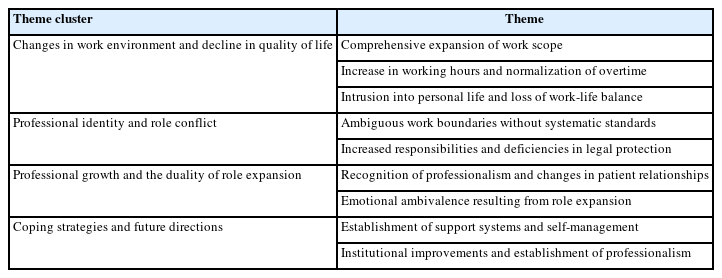
This study explored the lived experiences of physician assistants (PAs) in Korea during the 2024 medical workforce shortage, focusing on how they perceived and adapted to their rapidly changing roles. The study investigated both the challenges PAs faced and the professional growth they experienced throughout the adaptation process. Methods: A phenomenological qualitative design was applied using Colaizzi’s method. In-depth interviews were conducted with 15 PAs at a tertiary hospital in Seoul between September 25, 2024 and February 1, 2025. Data were analyzed thematically. Results: Four major theme clusters emerged: changes in work environment and quality of life, role conflict and ambiguity in professional identity, dual aspects of role expansion including autonomy and burnout, and coping strategies and structural policy demands. Participants reported physical and emotional strain, but also described greater involvement in care decisions, improved patient relationships, and a stronger sense of professional identity. Conclusion: Amid the medical staffing crisis, PAs adapted to their expanded responsibilities and became key healthcare providers. While facing substantial burdens, they simultaneously experienced personal and professional growth. Institutional and legal support is essential to stabilize their roles and improve long-term healthcare outcomes.

Citations

Citations to this article as recorded by  
  • The Effects of Emotional Intelligence and the Practice Environment on the Job-Esteem of Physician Assistant Nurses in University Hospitals
    Yoonjung Cho, Yeoungsuk Song
    Journal of Korean Academy of Fundamentals of Nursing.2025; 32(4): 488.     CrossRef
  • 2,843 View
  • 188 Download
  • 1 Crossref
Purpose
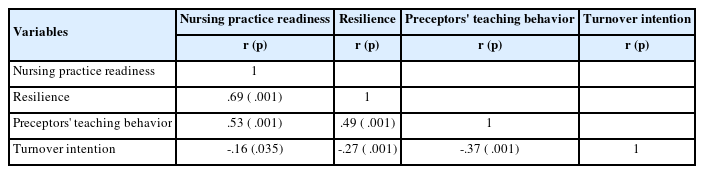
This study investigated the effects of newly graduated nurses’ perceived readiness for nursing practice, resilience, and preceptors’ teaching behaviors on turnover intention.
Methods
A survey was conducted among 168 newly graduated nurses between August 7 and 31, 2023. The data were analyzed using descriptive statistics, t-tests, one-way ANOVA, Pearson's correlation, and hierarchical multiple regression analysis.
Results
The factors that significantly affected turnover intention included preceptors' teaching behavior (β=-.29, p=.001) and resilience (β=-.21, p=.026). This model explained 32.0% of the variance.
Conclusion
Newly graduated nurses’ resilience and their initial training environment are key factors influencing turnover intention. Therefore, nursing managers should develop strategies to enhance the resilience of newly graduated nurses and improve training systems. Additionally, efforts should be made to promote positive teaching behaviors among the educators responsible for training newly graduated nurses.

Citations

Citations to this article as recorded by  
  • Perceptions on Fixed Night Shift System and Turnover Intention of General Hospital Nurses
    Mi-Aie Lee, Hye-Jin Cho, Sung-Hee Ahn, Hyo-Ju Kim
    Journal of Korean Academy of Nursing Administration.2015; 21(5): 519.     CrossRef
  • 3,778 View
  • 233 Download
  • 1 Crossref
Purpose
This study aimed to identify the effects of shared leadership, communication skills, and team effectiveness, as perceived by nurses and nursing assistants in comprehensive nursing service units.
Methods
A cross-sectional research design was adopted, and the sample included 306 nurses, nurse assistants, and caregivers working in nine hospitals with fewer than 500 beds in two South Korean cities. The data were analyzed using descriptive statistics, t-tests, ANOVA, Pearson’s correlation coefficient, and four-step hierarchical regression analysis.
Results
The factors influencing team effectiveness in the hierarchal multiple regression analysis were shared leadership (β=.57, p<.001) and communication skills (β=.18, p<.001). These factors explained 49% of the total variance.
Conclusion
To enhance team effectiveness in compressive nursing service units, educational programs focusing on shared leadership and communication skills among nurses, nursing assistants, and caregivers must be developed.

Citations

Citations to this article as recorded by  
  • Effects of Shared Leadership, Role Conflict, and Organizational Commitment on Patient-Safety Competency Among Clinical
    Hye-Jeong Hwang
    Journal of Digital Contents Society.2025; 26(7): 1821.     CrossRef
  • 3,608 View
  • 192 Download
  • 1 Crossref
Purpose
This study examined the impact of professional Quality of life (QoL) on turnover intention among general hospital nurses using linear and nonlinear analytical techniques.
Methods
Data were collected from 159 general hospital nurses and analyzed using SPSS, t-test, ANOVA, Pearson's correlation coefficients, multiple linear regression, and nonlinear machine learning models (Bootstrap Forest and Boosted Tree).
Results
Significant correlations were observed between turnover intention and both compassion satisfaction (r=-.26, p<.001) and burnout (r=.27, p=.001). Compassion satisfaction, burnout, and compassion fatigue were identified as the key variables influencing turnover intention. The explanatory power of multiple linear regression analysis was 6.9%, whereas the nonlinear machine learning models demonstrated an explanatory power of 50.5% for Bootstrap Forest and 45.1% for Boosted Tree.
Conclusion
Continuous investment in human resource management, within nursing organizations, is essential to promote the long-term retention of general hospital nurses. This investment should focus on enhancing compassion satisfaction and reducing burnout and compassion fatigue by fostering a sense of vocation and positive job satisfaction.

Citations

Citations to this article as recorded by  
  • A Study on Moral Distress, Compassion Fatigue, Compassion Satisfaction, and Their Predictors among Nurses Caring for Patients with Cancer
    Soomin Hong, Yesol Kim, Mi Sook Jung, Yoonjung Lee, Hyunju Hong, Mijin Jeon, Mee-Young Cho, Jiyeon Lee
    Asian Oncology Nursing.2025; 25(4): 217.     CrossRef
  • 1,556 View
  • 108 Download
  • 1 Crossref
Nurses’ Experiences of Cardiopulmonary Resuscitation: An Integrative Review of Qualitative Studies
Myunghwa Jeon, Hyeonji Kang, Sanghee Kim
J Korean Acad Nurs Adm 2025;31(1):110-119.   Published online January 31, 2025
DOI: https://doi.org/10.11111/jkana.2025.31.1.110
Purpose
This study analyzed and evaluated qualitative studies of nurses' experiences with cardiopulmonary resuscitation (CPR) to understand their awareness and develop effective strategies.
Methods
This study used an integrated literature review method developed by Whittemore and Knafl (2005). The scope of the literature search was broad and encompassed qualitative research exploring the experiences of nurses involved in CPR in hospitals. This search was conducted on March 27, 2023. For domestic literature, databases such as KOREAMed, KMBASE, and RISS were used, while foreign literature was sourced from PubMed, EMBASE, CINAHL, and COCHRANE databases.
Results
After careful analysis, nine relevant literature pieces were selected, leading to the derivation of four key themes: “Perception of CPR,” “Positive Experiences during CPR,” “Barriers Impacting CPR Execution,” and “Strategies for Enhancing CPR Effectiveness.” Conclusion: To positively reinforce the CPR experiences of nurses, it is necessary to establish educational programs and debriefings that reflect situations for effective coping with sufficient consideration of the medical environment of individual hospitals. Future research should consider comparative analyses of nurses' CPR experiences based on cultural factors and their respective working departments to identify areas for improvement.

Citations

Citations to this article as recorded by  
  • Exploring nurses’ experiences and educational needs in managing patients with left ventricular assist devices: A qualitative content analysis
    HyeonJi Kang, Mona Choi
    The Journal of Korean Academic Society of Nursing Education.2025; 31(4): 507.     CrossRef
  • 1,523 View
  • 56 Download
  • 1 Crossref
Purpose
This study aims to identify the moderating effect of nursing organizational culture on the relationship between resilience and clinical competence among new graduate nurses.
Methods
A survey was conducted from March 14 to July 14, 2023, targeting 210 new nurses with 3 to 12 months of experience, working in three general hospitals in Seoul and Gyeonggi-do. Data from 193 respondents were analyzed using descriptive statistics, correlation, and hierarchical regression.
Results
The resilience of new graduate nurses was moderate and their clinical competence was rated as good. They perceived a strong hierarchy-oriented culture, followed by a relationship-oriented culture, an innovation-oriented culture, and lastly, a task-oriented culture. Clinical competence was higher with greater resilience (β=.40, p<.001) and stronger perception of hierarchy-oriented culture (β=.16, p=.013). The interaction between resilience and innovation-oriented culture (β=.22, p=.012) was statistically significant, indicating that the effect of resilience on clinical competence was significantly higher when the innovation-oriented culture was strongly perceived.
Conclusion
To improve the clinical competence of new graduate nurses, it is essential to enhance their personal resilience and, at an organizational level, to strengthen the positive aspects of hierarchy-oriented and innovation-oriented cultures.

Citations

Citations to this article as recorded by  
  • Resilience and Social Support Protect Nurses from Anxiety and Depressive Symptoms: Evidence from a Cross-Sectional Study in the Post-COVID-19 Era
    Aglaia Katsiroumpa, Ioannis Moisoglou, Ioanna V. Papathanasiou, Maria Malliarou, Pavlos Sarafis, Parisis Gallos, Olympia Konstantakopoulou, Fotios Rizos, Petros Galanis
    Healthcare.2025; 13(6): 582.     CrossRef
  • 2,252 View
  • 120 Download
  • 1 Crossref
Purpose
This study aimed to understand the relationships between depression, post-traumatic stress, job demands, and social and organizational support among nurses working at general hospitals during the COVID-19 pandemic and to identify the factors influencing depression.
Methods
Data were collected from 240 nurses using a self-reported questionnaire between April 28 and May 7, 2023. Data were analyzed using descriptive statistics, an independent t-test, one-way ANOVA, Scheffé’s test, Pearson's correlation coefficient, and multiple regression.
Results
The mean scores for depression and post-traumatic stress were 15.49 and 17.90, respectively. Approximately 43% nurses experienced depression. Depression was positively related to job demands and post-traumatic stress and negatively related to social and organizational support. Multiple regression showed that post-traumatic stress (β=.33, p<.001), social support (β=-.30, p<.001), and job demands (β=.21, p<.001) explained 26.4% of the variance for nurses’ depression.
Conclusion
These findings indicate that efforts are needed to mitigate depression and post traumatic stress among nurses, even after the COVID-19 pandemic. Programs that can enhance social support and reduce post-traumatic stress and job demands are needed to prevent and decrease depression. In particular, hospitals and the government must prepare for national disasters, such as new infectious diseases, to reduce job demands.

Citations

Citations to this article as recorded by  
  • Burnout related factors of infection control nurses in long‐term care hospitals
    Su‐jin Lee, Seo‐Hyeon Kim, Hye Young Min, Ju‐Young Park
    Japan Journal of Nursing Science.2025;[Epub]     CrossRef
  • 562 View
  • 10 Download
  • 1 Crossref
Purpose
The study was conducted to identify the influencing factors the quality of work life in emergency nurses during prolonged COVID-19.
Methods
Data was collected on 197 emergency nurses, from November 8 to December 8, 2022. Data were analyzed based on descriptive statistics, t-test, ANOVA, Scheffé test, Pearson's correlation, hierarchical multiple regression analysis.
Results
There was significant positive correlation between disaster nursing core competencies, coping flexibility, and quality of work life. The primary factors that significantly affected the quality of work life of emergency nurses were disaster nursing core competencies (β=.66, p<.001) and emergency department experience (β=.19, p=.030). The explanatory power of variable was 60%.
Conclusion
As a result of the study, it was confirmed that disaster nursing core competencies were the factor that had the greatest impact on the quality of work life of emergency nurses. Thus, it is expected that regular simulation training and education to improve the disaster nursing core competencies of emergency nurses.

Citations

Citations to this article as recorded by  
  • Factors Influencing the Mental Well-being of Shift Nurses
    Yu Jin Lee, Chung Hee Woo
    Journal of Korean Academy of psychiatric and Mental Health Nursing.2025; 34(1): 54.     CrossRef
  • 1,531 View
  • 46 Download
  • 1 Crossref
Influence of Importance and Performance of Nursing Activities and Role Conflict on Professionalism in Outpatient Nurses
Jueun Cheon, Hye-Young Jang, Minjae Kim, Milye Jung
J Korean Acad Nurs Adm 2024;30(3):235-245.   Published online June 30, 2024
DOI: https://doi.org/10.11111/jkana.2024.30.3.235
Purpose
This study aimed to identify factors influencing nursing professionalism among outpatient nurses.
Methods
Data were collected through a self-evaluation survey of 157 nurses from general and tertiary hospitals in Seoul and Gyeonggi-do, Korea. Data were analyzed using independent t-tests, one-way ANOVA, Importance-Performance Analysis, Pearson correlation coefficients, and multiple regression analysis.
Results
The mean scores were as follows: importance, 3.29 out of 5; performance, 2.50 out of 4; role conflict, 3.23 out of 5; and nursing professionalism, 3.23 out of 5. There were statistically significant positive correlations between the importance (r=.32, p<.001) and performance (r=.38, p<.001) of nursing activities and professionalism. There were statistically significant negative correlations between role conflict and nursing professionalism (r=-.20, p=.014). Stepwise multiple regression analysis showed that the importance of nursing activities, performance of nursing activities, role conflict, working department, and sex explained 33.0% of outpatient nurses’ professionalism (F=8.66, p<.001).
Conclusion
The findings indicate educational system about important and highly accomplished tasks would be useful to improve nursing professionalism of outpatient nurses. Furthermore, reducing role conflicts by clearly distinguishing tasks is necessary to increase nursing professionalism.

Citations

Citations to this article as recorded by  
  • Impact of Nursing Professionalism, Ethical Sensitivity, and the Clinical Learning Environment on Nursing Students' Intention to Report Near Misses and Adverse Events
    Sookhee Yoon, Ha-Young Park
    Journal of Korean Academy of Fundamentals of Nursing.2025; 32(2): 209.     CrossRef
  • 882 View
  • 44 Download
  • 1 Crossref
Relationships among Nursing Skill Mix, Missed Nursing Care, and Adverse Events in Small and Medium-Sized Hospital Comprehensive Nursing Care Wards
Yoon Sook Cho, Hyoung Eun Chang, Hyunjung Lee
J Korean Acad Nurs Adm 2024;30(2):163-174.   Published online March 31, 2024
DOI: https://doi.org/10.11111/jkana.2024.30.2.163
Purpose
This study aimed to investigate the relationships among nursing skill mix, missed nursing care, and adverse events according to the nursing skill mix and the factors influencing.
Methods
This study is a descriptive survey that used survey data were collected from 158 nurses working in comprehensive nursing care wards in small and medium-sized hospitals. The data were analyzed using the t-test, analysis of variance, and multiple regression analysis.
Results
The average age of the study participants was 37.9 years, and they had over 10 years of experience. The average mean ratio of nursing skill mix 1 was 69.98. For nursing skill mix 2, the average mean ratio was 68.44%. The mean score for missed nursing care was 1.33, and the mean score for adverse events was 1.90 points. The factors affecting adverse events experience were missed nursing care, total work experience of >3 years, number of beds between ≥200 and <300.
Conclusion
Our findings suggest that patient safety and management education should consider the nurses’ age and total work experience. Furthermore, nursing workforce management, particularly focusing on nursing assistants in small- and medium-sized hospitals, is essential for fostering a safer healthcare environment.

Citations

Citations to this article as recorded by  
  • Effects of presenteeism on turnover intention in clinical nurses through the serial mediating roles of missed nursing care and job satisfaction: a cross-sectional predictive correlational study
    Hyeonseon Cheon, Seok Hee Jeong, Hyun Kyung Kim, Hyoung Eun Chang
    Journal of Korean Academy of Nursing.2025; 55(4): 584.     CrossRef
  • 832 View
  • 50 Download
  • 1 Crossref
Purpose
To examine the effects of a remote videoconferencing-based expressive writing program on the posttraumatic stress, resilience, and posttraumatic growth among traumatized nurses.
Methods
A randomized controlled group study with a pretest-posttest design was adopted. Data were collected between August 18 and November 6, 2020 from 48 nurses who experienced trauma working at a hospital in Jeonbuk Province (24 participants each in the experimental and the control groups). The experimental group participated in six sessions of the expressive writing program following the principles of Pennebaker’s expressive writing. Sessions (duration 90 minutes) were conducted twice a week for three weeks.
Results
Compared with the control group, the experimental group exhibited a statistically significant difference in posttraumatic stress (F=135.41, p<.001), resilience (F=94.88, p<.001), and post-traumatic growth scores (F=109.28, p<.001) immediately following intervention, and these scores were maintained at the 3-week follow-up.
Conclusion
The findings suggest that the expressive writing program can be effectively used for the prevention and management of posttraumatic stress in nurses at a risk of trauma.

Citations

Citations to this article as recorded by  
  • Comparative effectiveness of resilience-related interventions on resilience and stress for healthcare professionals: A network meta-analysis of randomized controlled trials
    Fitria Endah Janitra, Ruey Chen, Chien-Mei Sung, Chia-Hui Wang, Yan Adi Wibawa, Kondwani Joseph Banda, Kai-Jo Chiang, Kuei-Ru Chou
    International Journal of Nursing Studies.2025; 170: 105151.     CrossRef
  • 1,071 View
  • 22 Download
  • 1 Crossref
Purpose
This study was conducted to identify the factors influencing nurses’ intention to stay after coming back from parental leave.
Methods
This was a descriptive cross-sectional study. The participants were 175 female nurses working in hospitals with over 300 beds and returning after three months of parental leave. Data were analyzed using independent t-test, one-way ANOVA, Pearson’s correlation coefficient, and stepwise multiple regression.
Results
There were significant differences in intention to stay by age (t=2.65, p<.001) and position (t=-2.23, p=.027). Intention to stay was positively correlated with social support (r=.24, p<.001) and self-efficacy (r=.42, p<.001), and negatively correlated with work-family balance conflict (r=-.21, p=.004). Factors influencing intention to stay were self-efficacy (β=.94, p<.001) and work-family balance conflict (β=-.49, p=.005), with an explanatory power of 20%.
Conclusion
The findings allow for proposing that increasing nurses’ intention to stay may require self-efficacy improvements to enable nurses to adjust to their work environment, and hospitals should provide nurses with institutional support in order to reduce nurses’ work-family conflicts.

Citations

Citations to this article as recorded by  
  • Parenting Without Penalty: Paid Parental Leave as a Boundary‐Management Strategy for Nursing Workforce Sustainability
    Adrianna Watson
    Journal of Advanced Nursing.2025;[Epub]     CrossRef
  • 2,002 View
  • 33 Download
  • 1 Crossref
TOP